THE FITTING BOOK
NOW

LOOSEN A PANTS PATTERN ON THE CALF AREA
How to Fix Horizontal Drag Lines: Adjusting a Waist That’s Too Tight in Skirts, Pants, and Dresses
Have you ever noticed horizontal drag lines across your pants, skirt, or dress? These wrinkles are one of the most common garment fitting issues and are a clear sign that your garment is too tight, often at the waist.
If your garment is wrinkling, creasing, or pulling—especially with drag lines forming across the body or pointing toward the darts—it’s time to make a simple but effective fitting adjustment.
In garment fitting, horizontal drag lines indicate tension. The fabric is being pulled too tightly across the body, which causes these visible wrinkles.
While the drag lines may appear in one area, the actual tightness is often at the waistline or slightly below. That’s why it’s important to assess the overall fit of the garment rather than focusing only on where the wrinkles appear.
To fix a waist that is too tight on a skirt or dress, start by opening up the side seams on both the right and left sides of the garment. Allow the fabric to relax naturally on the body.
Once the tension is released, tape or pin the garment open and measure the total amount of width needed to eliminate the drag lines. This measurement tells you exactly how much ease your garment was missing.
Next, transfer this adjustment to your sewing pattern. Take the total amount you added at the side seams and divide it evenly between the front and back pattern pieces.
This ensures the garment remains balanced and properly aligned on the body, which is essential for accurate pattern making and professional garment fitting.
If your drag lines are pointing toward the darts or you notice wrinkling in that area, the issue may also involve the dart depth. In this case, instead of adding all the width at the side seams, you’ll want to reduce the dart intake.
Take half of the amount you added at the side seam and apply it to the dart by making it shallower. This effectively increases the waist measurement while improving how the garment shapes over the body.
Another helpful approach is to open the dart directly on the garment and visually determine how much you want to reduce it for the best fit.
Always remember that horizontal drag lines mean the garment is too tight. However, the tightness is not always exactly where the drag lines appear.
It may be slightly above or below, so it’s important to evaluate the garment as a whole and identify where more space is needed. Learning to recognize and correct drag lines is a key skill in sewing and will dramatically improve your garment-fitting results.
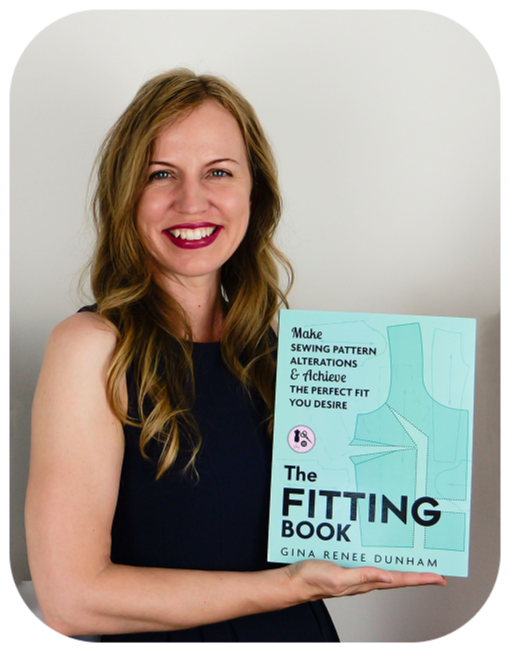
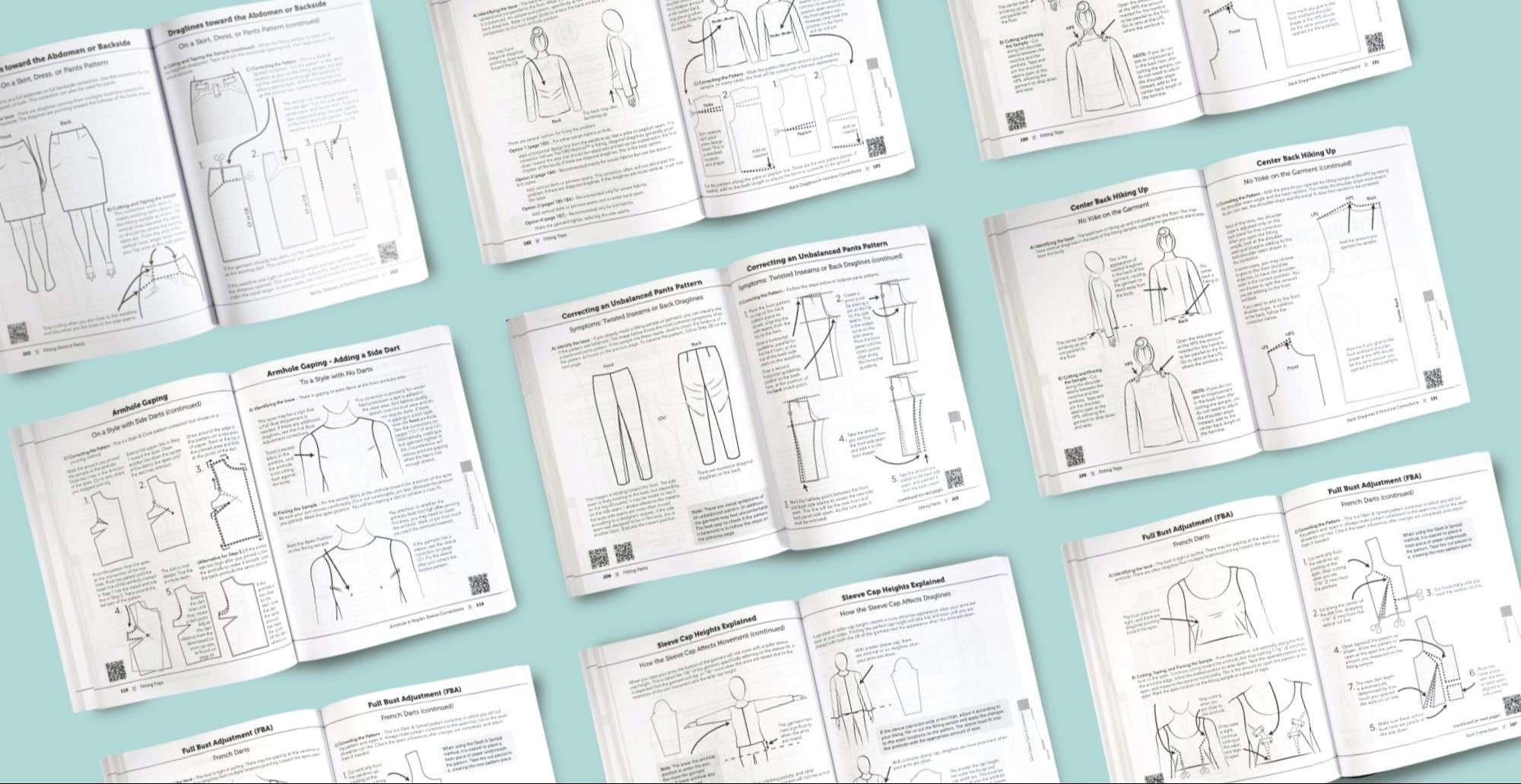
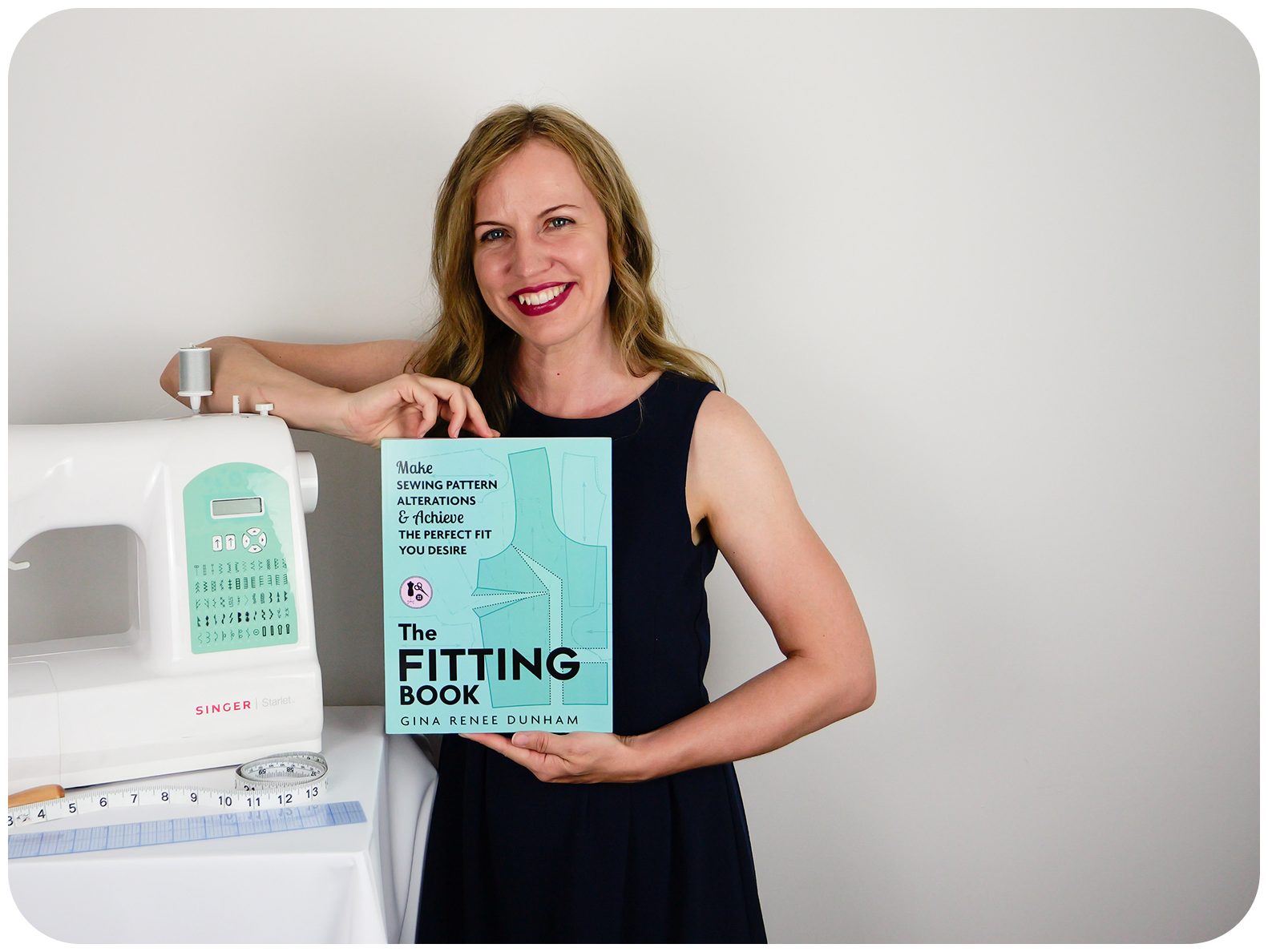
If you want to go deeper into garment fitting, pattern adjustments, and solving common fitting problems, you can find this information and more in The Fitting Book. The book is designed to help you confidently adjust your patterns and create garments that truly fit your body.
BUY THE FITTING BOOK NOW
THE FITTING BOOK:
The Ultimate Fitting Guide
That You’ll Use Throughout
Your Fitting & Sewing Journey.

LEARN
THE 3-STEP
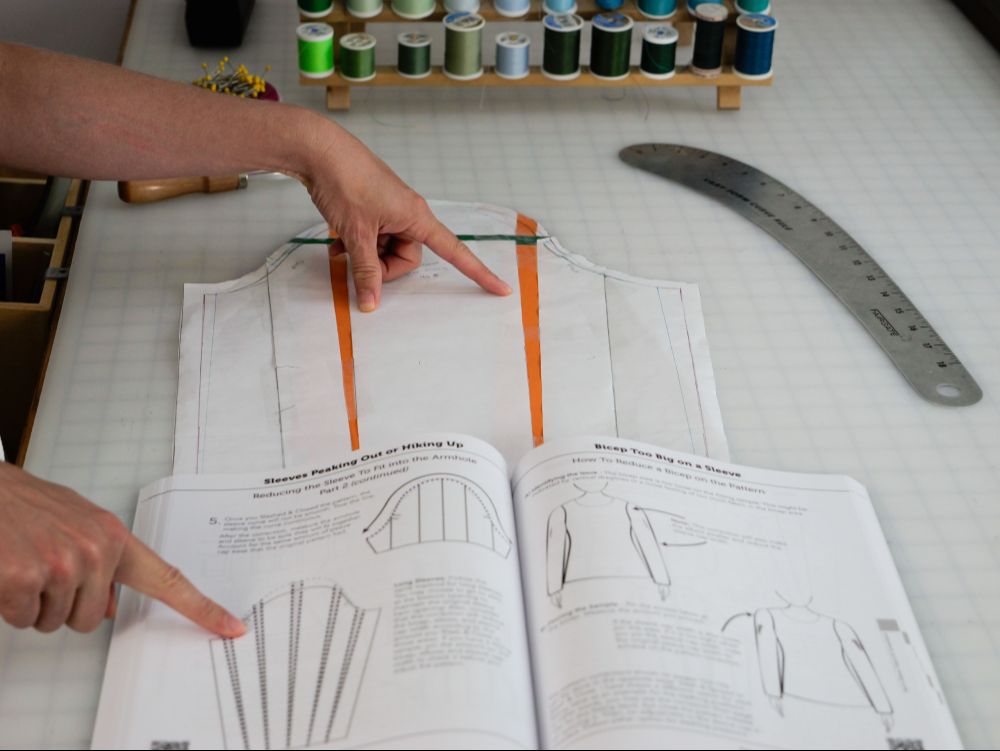
FITTING PROCESS:
- ✔ Identify the Fitting Issue.
- ✔ Pin, Cut, & Tape the Fitting Sample.
- ✔ Correct the Sewing Pattern.
CUSTOMIZED FIT
YOU WANT
The Fitting
Book
INCLUDES:
- ✔ Tops
- ✔Pants
- ✔ Skirts/Dresses
- ✔ My Secret in Fitting
Diagonal Draglines
Love that Fit.
let's connect
- Follow this Pinterest Board for Sewing ideas and Inspiration!
- Join the Sewist Facebook
- Follow & DM me on Instagram@GinaReneeDesigns.
MEET GINA
It's a feeling of happiness to create and sew. Sewing allows the imagination to flourish which brings fulfillment and gives a sense of accomplishment. For so many people, sewing is that happy place. It s getting into that creative flow where time doesn't exist and problems seem to disappear. The result is amazing. When you try that item on after you 've finished it, there is nothing better than feeling 100% YOU. You 've designed it with your fabric combinations and it fits you Meet Gina